Digital Contact Tracing v.2
While digital contact tracing has been extensively studied in Western contexts, its relevance and application in Africa remain largely unexplored. This study focuses on Kenya and Côte d’Ivoire to uncover user perceptions and inform the design of culturally resonant contact tracing technologies. Utilizing a wearable proximity sensor as a technology probe, we conducted field studies with healthcare workers and community members in rural areas through interviews (N = 19) and participatory design workshops (N = 72). Our findings identify critical barriers to adoption, including low awareness, widespread misconceptions, and social stigma. The study emphasizes the need for culturally sensitive and discreet wearables and advocates for awareness campaigns over mandates to foster adoption. Our work addresses the unique needs of Kenyan and Ivorian populations, offering vital design recommendations and insights to guide designers and policymakers in enhancing digital contact tracing adoption across Africa. To read details, please see our CHI’25 paper.
Multiparty privacy conflicts
Internet users share ever-increasingly multimedia content online (i.e., photos and videos). Most of the shared contents are co-owned data depicting more than one user (e.g., group photos). Sharing co-owned multimedia content without getting consent causes Multiparty Privacy Conflicts (MPCs), and it might have severe privacy implications on the users’ life. In this project, we aim to design and evaluate novel technological interventions to deter users from sharing multimedia content with other users without their consent.
In the project’s first phase, we studied how persuasive technologies (so-called Dissuasive mechanisms) can influence users toward more considerate and mindful behavior. We explored using different persuasive approaches such as reward, punishment, and empathy to discourage users from sharing online. Check out our paper published in CSCW’21 for further details.
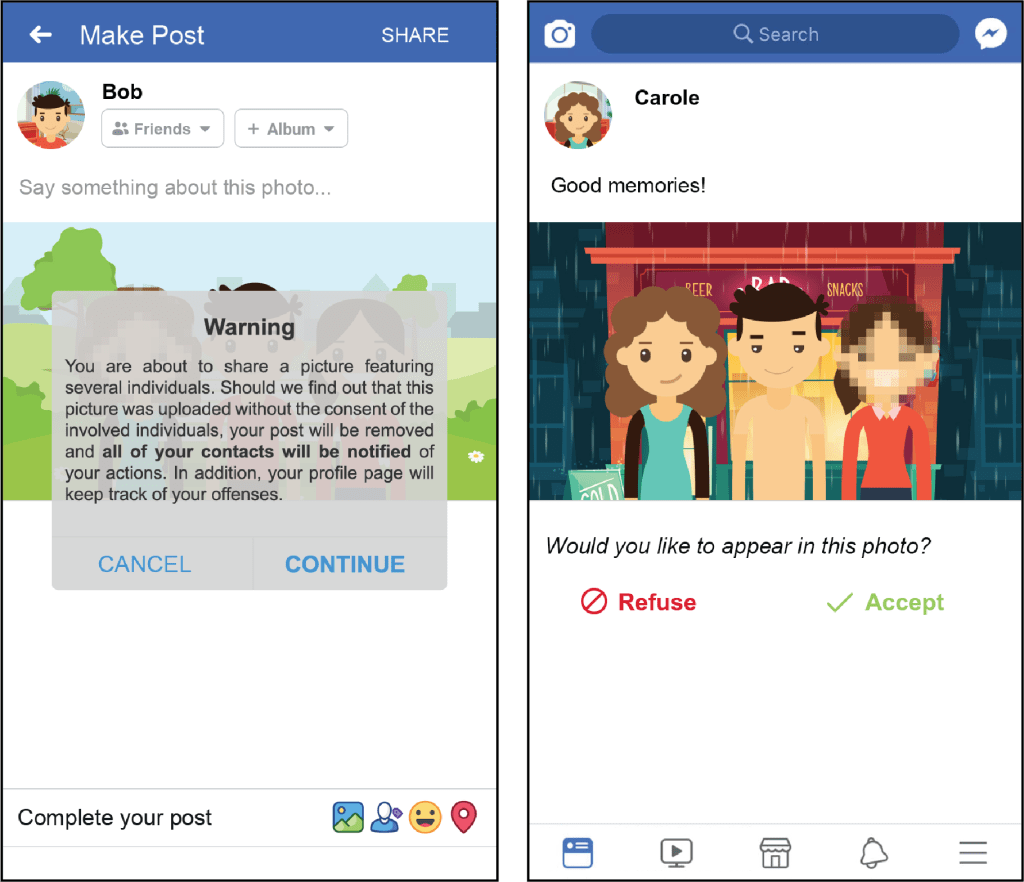
In another attempt, we took a more user-centric approach (participatory design) and asked young MPC-experienced users to design with us and reflect on their experience and creativity to propose novel and effective solutions against MPC. We used the well-known ‘participatory design’ approach, inviting social media users who caused MPC and those who suffered from MPC to attend various participatory design activities. Check out our DIS’21 paper to discover the ten exciting ideas social network users co-designed for mitigating privacy conflicts caused by non-consensual multimedia sharing!
Our participatory design approach informed the third phase of the project. We focused on the Potential of Mediation Chatbots for Mitigating MPCs. We investigated the potential of conversational agents as mediators to negotiate and mitigate MPCs effectively. We developed “MediationBot,” a chatbot mediator facilitating consent collection to allow users to express their perspectives and propose middle-ground solutions. To evaluate its efficacy, we conducted a Wizard-of-Oz experiment involving N=32 participants. The results revealed that MediationBot significantly aids users in reaching agreements and preventing MPCs. The structured conversations enabled well-clarified speaking turns, fostering a supportive environment. Participants valued MediationBot for its ability to propose practical middle-ground solutions. To read the details, please see our CSCW’23 paper. Finally, our work received press coverage in Medium.

The MPC project was partially funded by Swiss National Science Foundation (SNF).
The Impact of Information Disclosure and Third-Party Involvement on Cyberbullying
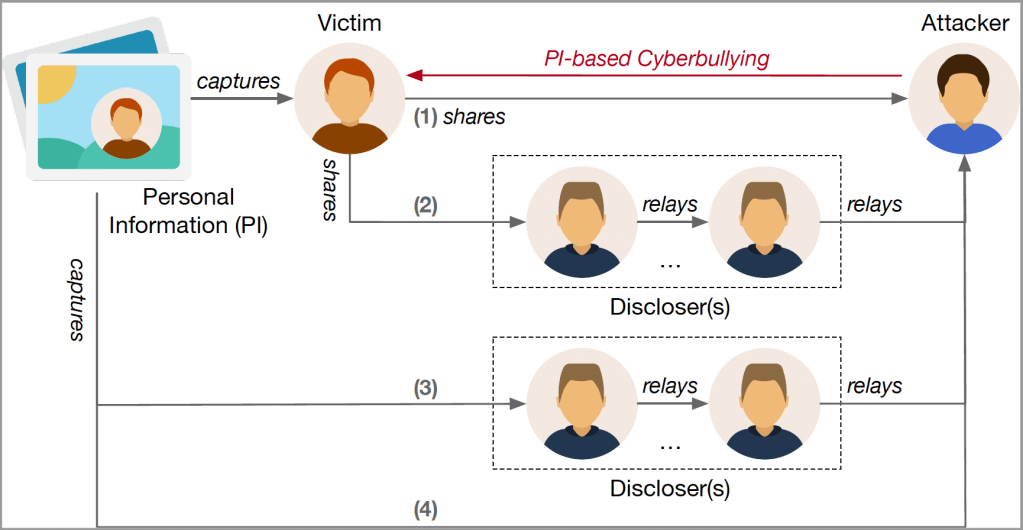
I delved into the pervasive issue of cyberbullying (CB) and its links to the disclosure of personal information. As CB becomes increasingly prevalent, with significant consequences for victims’ mental health and well-being, understanding the dynamics of information disclosure is crucial. Previous studies have explored CB from various angles, but the role of third-party disclosers has remained understudied. To bridge this gap, I conducted a large-scale survey involving victims, attackers, and disclosers from the United States and Nigeria. Our findings shed light on how CB incidents are closely related to personal information disclosure, with nearly one in four CB incidents involving disclosers. We observed violations of trust, where information co-owners further spread personal information, exacerbating CB. The study offers valuable insights into designing effective mitigation strategies and social media literacy programs. To read more, please check my paper published at PETS 2023.
Evaluating Ethics & Transparency in HCI Research
The field of Human-Computer Interaction (HCI) relies heavily on empirical research, making ethical considerations, openness, and transparency crucial aspects of conducting studies. Over the past decade, the value of openness and transparency in research has gained recognition in various scholarly fields, including HCI. Research ethics in HCI encompasses protecting participants, obtaining informed consent, and ensuring data safety, with several dedicated publications and events exploring this topic. Openness refers to the availability of research publications and materials, and initiatives have led to freely downloadable conference papers in the ACM SIGCHI community. Transparency, closely related to openness, involves disclosing research details such as methods and data. To assess the state of research ethics, openness, and transparency in HCI, I, together with my colleagues in the PET Lab, made three contributions:
- We manually assessed samples of papers published at CHI 2017 and 2022.
- We developed a proof-of-concept screening system to automate this attempt in future literature reviews.
- We developed 46 criteria for evaluating research transparency, openness, and ethics.
Our findings show positive changes in CHI 2022, with improvements in research ethics and transparency practices, though overall rates remain low. Our work identifies areas for improvement and suggests implications to enhance research practices and awareness in HCI. This work was published at ACM CHI 2023 and recognized as the best paper award.
To read and use our criteria, please check the OSF preprint. To further develop and use our screening system check Github. To read our paper, please click here.

Privacy of Wearable Activity Trackers
Wearable Activity Trackers (WATs), such as fitness trackers, smartwatches, and wristband devices, are trendy and widely used fitness technologies. These devices help users track their physical activity and other health-related measures such as heart rate. These devices also allow users for more sophisticated tracking functions such as sleep tracking, and thus in the long-term, they can bring considerable health benefits for users. Nevertheless, besides their numerous benefits, using WATs can have privacy implications. The disclosure of users’ fitness information—7/24 collected by the tracker devices—associated with their fitness accounts can help adversaries infer sensitive information. In this research, we are interested in understanding how fitness-tracker users understand the privacy risk associated with their devices, what are their mental models, and if certain obfuscation methods like data minimization can help users preserve their privacy without negatively affecting the perceived utility of the WAT users. For more details, please check out our recent paper published in IMWUT’21.
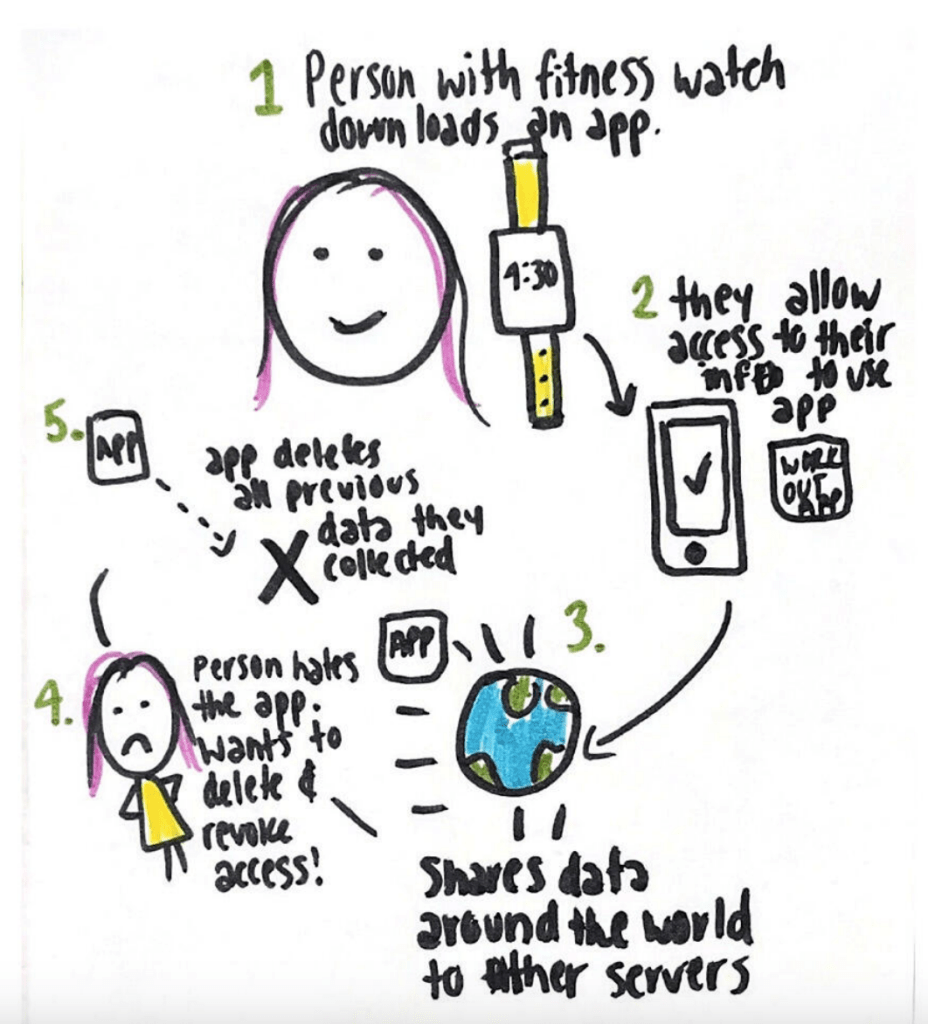
For the second phase of this project, we focused on Third-Party Applications (or TPAs). As users increasingly share their fitness data with TPAs, it becomes crucial to understand their behaviors and attitudes toward data sharing to assess privacy risks and develop effective privacy-enhancing techniques. We conducted a comprehensive study by surveying N=628 WAT users to quantitatively and qualitatively analyze their awareness, understanding, and practices related to fitness data sharing with TPAs. We gained insights into their mental models and actual data-sharing behaviors through an innovative approach that involved asking users to draw their thoughts. Our findings revealed several significant trends. Surprisingly, around half of the WAT users underestimated the number of TPAs accessing their data, and 63% shared data with at least one TPA they no longer actively used. Alarmingly, 29% of the users failed to revoke TPA access due to forgetting that they had granted it initially, and 8% were unaware of the revocation option altogether. Additionally, users’ mental models exhibited significant gaps in understanding the data-sharing process, leading to potential misconceptions about data accessibility by TPAs. To read more about this work, please check our PETS’23 paper.
This project was conducted under PrivateLife project funded by Armasuisse.
WATs and older adults
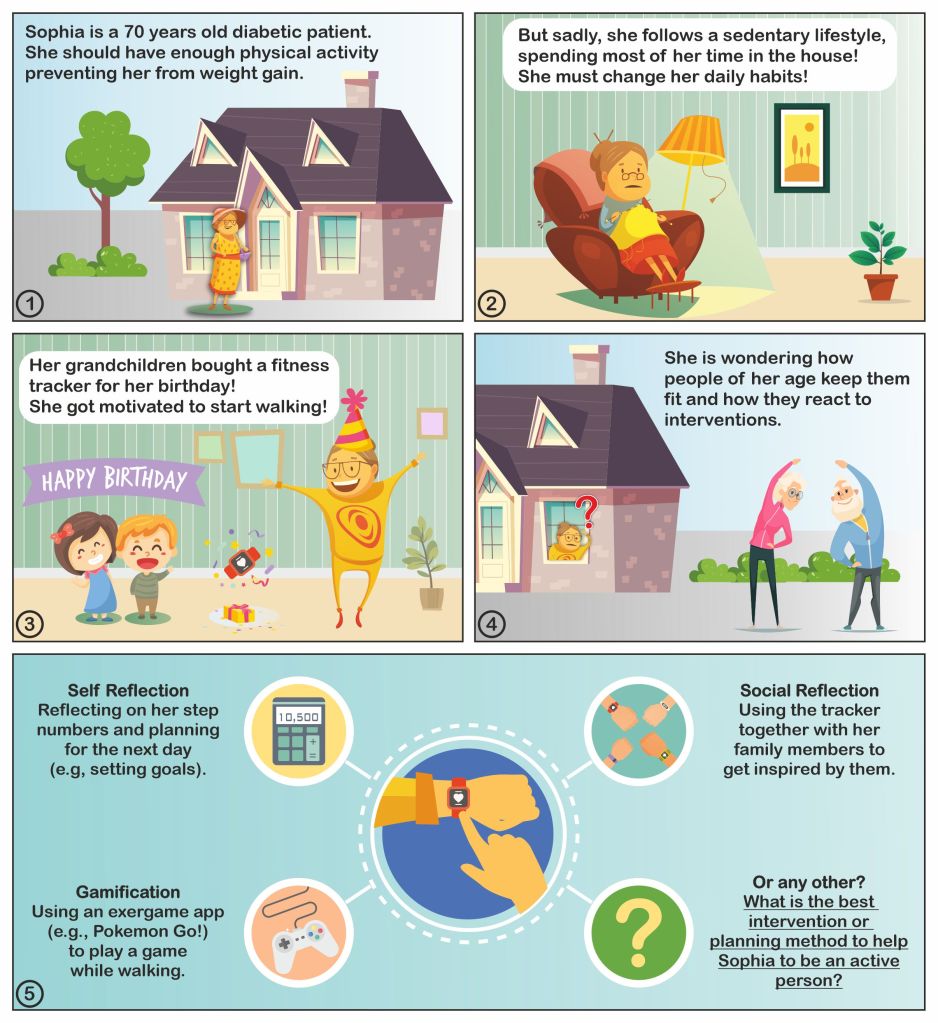
Obesity, diabetes, and heart disease are some of the most severe health problems of older adults in modern societies. Many studies and reports identify inactivity as one of the primary risk factors. Older adults should change their daily habits and behaviors to become more active. The difficulty of such a behavior change lies not in contemplating the change itself but often in figuring out how to adopt an efficient yet safe pattern over time and selecting the most suitable external intervention. This project contains two parts:
Intergenerational Fitness Tracking Practices
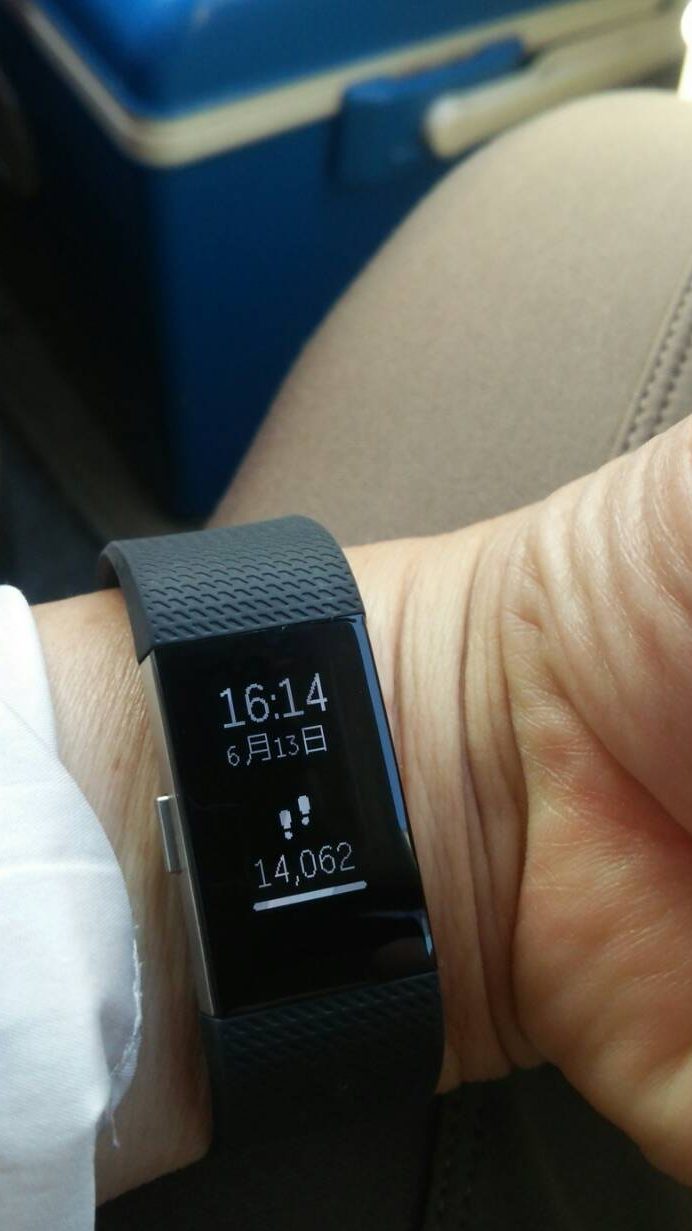
Social support is an important motivation for individuals to participate in fitness activities, regardless of their age; many studies confirmed that having an exercise companion effectively promotes physical activity. In this part of the project, we focus on Intergenerational interactions between old and young users. Our goal is to understand how older adults perceive intergenerational fitness practices, what are the common fitness and social practices to maintain an active life, and how intergenerational support might impact older adults’ fitness behavior. At the same time, using a fitness tracker poses significant technological barriers for older adults. So we ask how intergenerational support can help older adults overcome technology barriers. Our findings were published in CCF Transactions on Pervasive Computing and Interaction. Please check out the details here. Our work has received the Best Paper award from CCF Transactions on Pervasive Computing and Interaction in 2023.
Behavior Recommender Systems
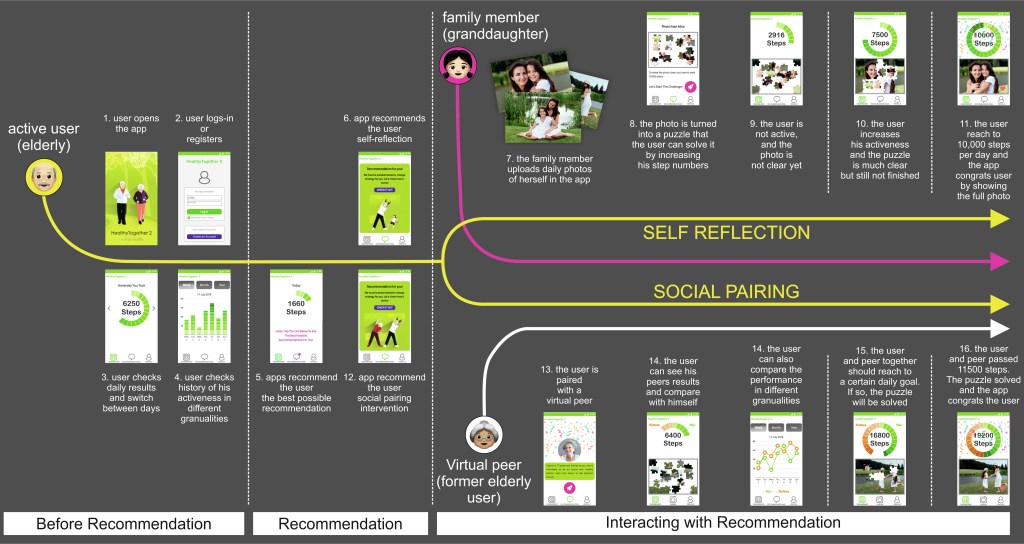
In this part of the project, we propose a behavior recommender system that can support older adults in this arduous journey. We identified two most important characteristics of this new type of recommender system: (1) a time series modeling approach of user behavior both before and after the intervention (2) a machine learning approach to understand past users’ responses to external interventions, such as a persuasion message or the suggestion of getting paired with an exercise buddy.
We design a mobile app that meets the requirements of an app capable of helping older adults change their behaviors towards a more satisfying outcome. We also evaluated user experience and attitudes in the longitudinal real-world context. In particular, we studied ‘recommendation acceptance,’ whether users accept or decline the recommended strategies. The articles relevant to this project are under review. Please stay tuned!
This project was part of the REACH 2020 project. It was partially funded by European Union's Horizon 2020 research and innovation programme.
Attention Regulation Framework: A Framework for Interactive Meditation
And my beloved Ph.D. work 🙂
We are often overwhelmed by everyday stressors. Mindfulness meditation can help slow things down and bring one’s attention to the present moment. Given the prevalence of smartphones, mindfulness-based mobile applications (MBMAs) have received much attention. Current MBMAs mainly use the guided meditation method, which may not always be effective, e.g., users may not be able to follow the pace of instructions. We presented a framework (Attention Regulation Framework) for interactive MBMAs, allowing users to self-regulate their attention according to their abilities and conditions. We validated our framework with several studies.
For further details, please check the initial version of our framework published in CHI’17 and the extension of the framework published later in TOCHI.
Understanding the Role of Human Senses in Interactive Meditation
Mindfulness-based mobile applications (MBMAs) exploit various senses, e.g., touch, audio, and vision, but the relationship between human senses and interactive meditation is not well understood. This project empirically evaluated the effects of single and combined human senses on interactive meditation. We found that the effectiveness of human senses can be defined by their respective roles in maintaining the balance between relaxation and focus. Please check our paper published in CHI’17 for further information.
Video Games for Cognitive Enhancement of the Elderly
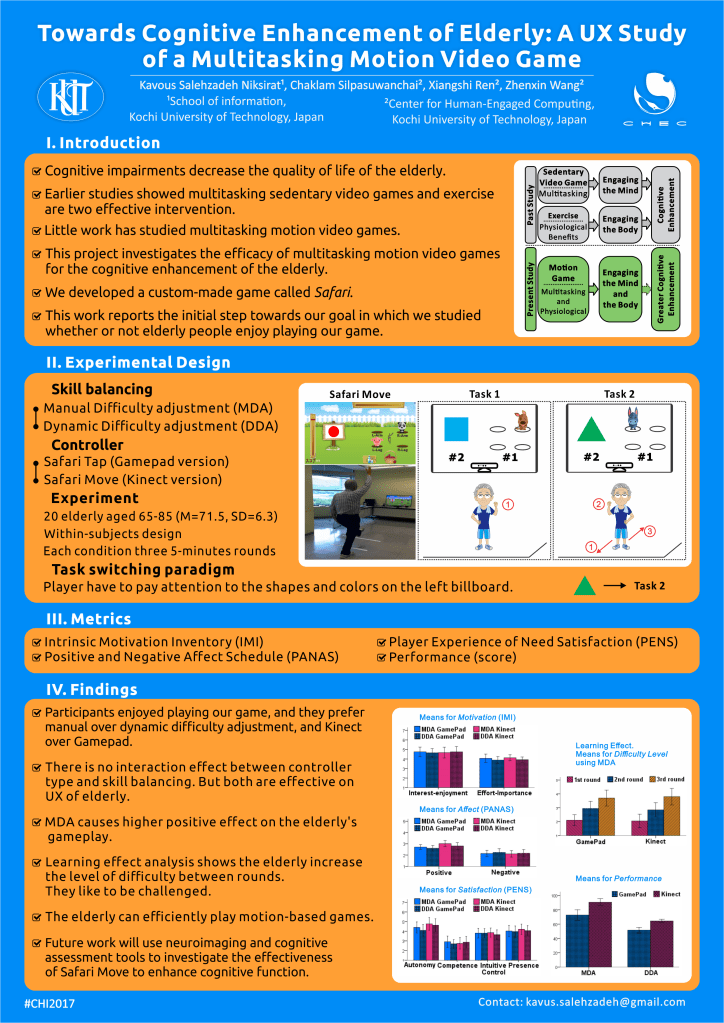
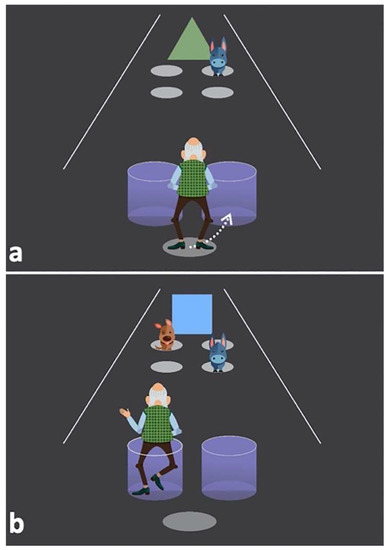
Cognitive impairments decrease the quality of life of the elderly. Earlier studies show multitasking sedentary video games are an effective intervention. However, little work has studied multitasking motion video games which can be more directly beneficial for overall well-being. This project investigates the efficacy of multitasking motion video games for the cognitive enhancement of the elderly. As a response to this situation, we developed a custom-made game called SAFARI MOVE. Here (CHI’17 LBW), we reported the initial step towards our goal in which we studied whether or not elderly people enjoy playing our game. Two important game elements were studied – skill balancing methods and controller types. Our results demonstrated that our participants enjoy playing our game and that they prefer manual over dynamic difficulty adjustment and Microsoft Kinect over Gamepad.
Later, in a different work (published in Sustainability, Special Issue on Sustainable Human-Computer Interaction and Engineering), we studied how playing a multitasking motion video game in a virtual reality (VR) environment can positively impact older players’ cognitive and physical health. We developed a video game that combines cognitive and physical training in a VR environment. This time, we used cognitive assessment tools to investigate the effectiveness of our VR video game. We found that four weeks (i.e., three 45-minute sessions per week) of playing our video games can significantly improve older adults’ working memory, and it has the potential to enhance their reasoning and balance ability. We also found that, interestingly, the enhancements of cognitive ability were associated with older adults’ intrinsic motivation to play.
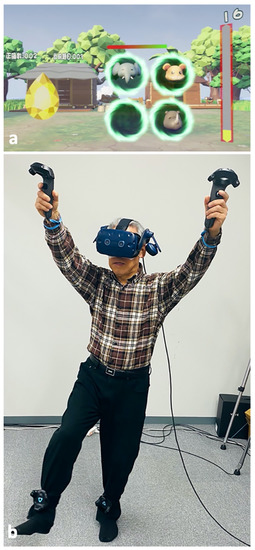
The Elderlies' Cognitive Video Game project was funded by KAKEN research grant - Japan MEXT (Ministry of Education, Culture, Sports, Science, and Technology).
My Attempts to Understand “engagement” in the Human-Engaged computing (HEC) framework
Given the ever-increasingly intertwined relations between humans and technologies, the debates regarding the nature and role of HCI research and practice have intensified in recent years. The Human-Engaged Computing (HEC) framework was proposed and developed over several scholarly workshops to complement mainstream HCI models by leveraging the synergy between humans and computers with its key notion of “engagement.”
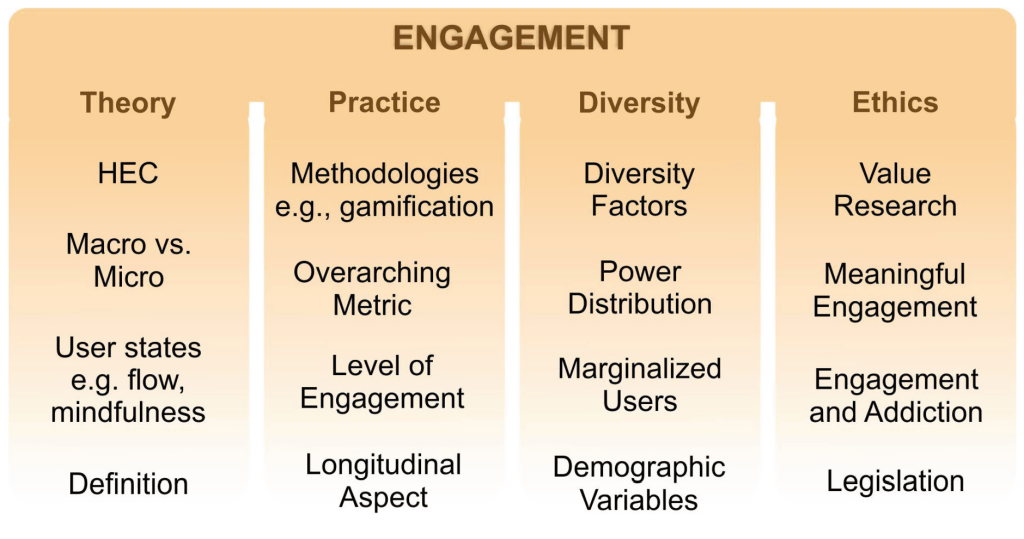
Engagement bears critical significance, not just for informing the design and implementation of the interface but also for creating improved and advanced interfaces that can adapt to users. While the idea of user engagement is passively being researched in a range of domains, it has been used for various related but diverse concepts. For instance, engagement is a vital element of an effective HCI design. The primary goal of my research was to introduce relevant research questions related to the engagement domain. I discussed engagement from four different perspectives:
- Theory: identifying key issues that aid in building a pluralism of engagement frameworks
- Practice: developing novel methodologies for user engagement and reliable assessment tools
- Ethics: discussing the ethical aspects of engagement, especially for designers and developers of human technologies
- Diversity: investigating individual differences to develop personalized, engaging designs and understanding user diversities to provide equal opportunities for user engagement.
Check out the relevant articles for more details (here and there) or read the summary of the SIG meeting in CHI’18.
Flow Proneness and Brain Structure
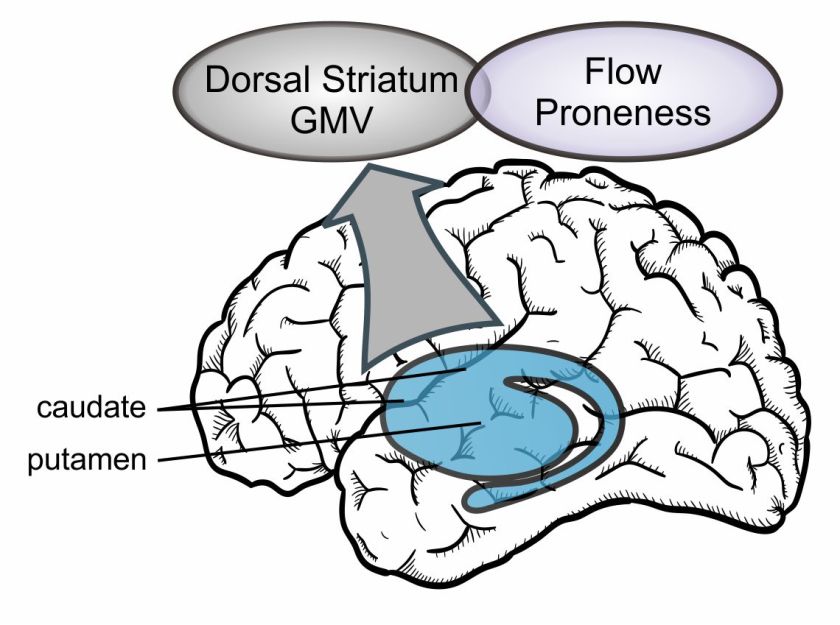
Flow Proneness – FP (i.e., the dispositional tendency to experience flow) is subjectively different across individuals. An earlier study demonstrated that FP is correlated with the availability of dopamine receptors in the dorsal striatum, including the caudate and the putamen. However, whether FP is associated with gray matter volume variations in the brain remains unclear. In this project, we investigated the neuroanatomical basis of FP for the first time. We conducted a cross-sectional study with a high number of healthy, employed Japanese adults. We found that an increase in gray matter volume in the right caudate is associated with an increase in overall FP in everyday life.
For more information, please check out our paper published in the Personality and Individual Differences journal.
 KAVOUS SALEHZADEH NIKSIRAT